7 Self-Care Habits Parents Can Model for Their Kids (Starting Today)
Last Tuesday, my 4-year-old watched me spill an entire mug of coffee across the kitchen counter—the one I'd reheated three times already. I didn't yell or shove the mess aside. I just stood still for a breath, said out loud "I'm really frustrated right now, so I'm going to take one quiet minute," and closed my eyes. She stopped mid-whine and stared. Then she did something new: she waited. That moment rewired something for me. We tell kids to "calm down" all day, but they learn what calm looks like by watching us steal it back in the wreckage. The self care habits parents can model for their kids aren't the polished, Instagrammable kind. They're the raw, five-second pivots we make when everything is going sideways—and we let them see it.
For a long time, I thought being a good parent meant hiding my overwhelm. I'd grit-smile through the bedtime stall tactics, swallow the frustration when plans fell apart, and save any "me time" for after they were asleep—if I still had the energy. But hiding the recovery process teaches kids that strong people don't struggle. Or worse, that the way to cope is to shove feelings down until they explode. When I started letting my kids see me actively take care of my inner state—not as a treat, but as a non-negotiable pit stop—their own ability to self-regulate grew in ways no amount of prompting had ever achieved.
Why Modeling Self-Care for Kids Matters More Than You Think
For decades, parenting advice orbited around what we do for children—the enrichment activities, the nutritious meals, the consistent discipline. Self-care for parents was framed as a guilty indulgence or a last-resort prescription for burnout. That framing misses a profound teaching opportunity. When a child watches a parent pause, name a hard feeling, and choose a small restorative action, the child isn't just observing a grown-up taking a break. They're absorbing a template for emotional regulation that no workbook or social-emotional learning lesson can replicate with the same visceral impact.
I have a somewhat unpopular opinion here, and it's this: The mainstream "self-care" conversation—bubble baths, spa days, solo weekend getaways—has actually made things harder for parents of young kids. It equates self-care with big, infrequent escapes that require time, money, and childcare logistics most of us don't have. When those aren't possible, parents feel like they're failing at self-care before they even start. The real needle-mover, especially when you're modeling for small children, is what I call visible micro-recovery: tiny, unglamorous resets done in under two minutes, right in the middle of the chaos, where your kids can see and eventually mirror them. A 2021 observational study published in the Journal of Family Psychology noted that children as young as three begin to imitate parental emotion-regulation strategies after repeated exposure—not after one big talk, but through dozens of small, consistent demonstrations (Morris et al., 2021). That's the empirical backbone of why modeling matters, but the lived experience is even more convincing: my daughter now puts her hand on her chest and takes a loud breath when she's mad, and she got that from watching me, not from a chart on the wall.
Modeling self-care also flips a toxic cultural script. Many of us grew up in households where a parent's exhaustion was either a badge of honor or a source of silent resentment. When we openly tend to our own needs—without apology—we give children permission to do the same. They learn that rest is not a reward for productivity; it's maintenance, like brushing teeth. And they learn that asking for help or stepping away when overwhelmed is a sign of self-respect, not weakness. This isn't about putting adult burdens on kids; it's about letting them witness the ordinary, unglamorous ways we refill our own cups so they develop an internal model that includes self-compassion.
Habit #1: The 5-Minute 'Reset' Ritual After a Hard Moment
Not every difficult parenting moment allows for a five-minute break, but many more do than we admit. The key is ritualizing it so it becomes automatic—and making it visible enough that your child sees the transition from dysregulation to calm. In my house, the reset has three steps: I say what I'm feeling in plain words ("I'm feeling really tight in my chest because the noise is a lot right now"), I state the action ("I'm going to sit on the step for three minutes and breathe"), and I do it in a place where they can see me but not climb on me. The step is our designated reset spot—no toys, no screens, just a small cushion.
When I first tried this, my 6-year-old followed me and peppered me with questions the entire time. It didn't feel like a break at all. It took about a week of consistent, boring repetition before he stopped treating it as a novelty and started treating it as a household norm. Now, occasionally, he'll say "I need a step minute" and go sit on the cushion himself. He doesn't always use it appropriately—sometimes it's a stall tactic for cleaning up—but the underlying mechanism is taking root: the idea that when feelings get too big, you can step away briefly without punishment or shame.
What makes this a self-care habit rather than just a time-out is the naming of the internal state. Research from Dr. Dan Siegel's work on interpersonal neurobiology highlights that simply labeling an emotion can reduce its intensity by engaging the prefrontal cortex and dampening amygdala reactivity (Siegel, "The Whole-Brain Child"). When parents narrate that process out loud, children receive a live demonstration of emotional literacy. You don't need to use clinical terms. "My body feels hot and my jaw is tight, so I'm going to shake out my hands and take five slow breaths" is plenty. The habit sticks when it's repeated, predictable, and never used as a threat.
Habit #2: Saying 'No' (Without Guilt) to Protect Your Energy
I used to say yes to every playdate invitation, every classroom volunteer request, every extended-family obligation—and then wonder why I was snapping at my kids over spilled milk by Thursday. The turnaround came when I declined a Saturday birthday party because I could feel, physically, that we needed a slow morning. My daughter was disappointed, and I didn't try to jolly her out of it. I said, "I know you really wanted to go, and I'm saying no because our whole family's battery is low. When my battery is empty, I'm not the kind of mom I want to be." She sulked for ten minutes, then built a fort and forgot about the party entirely.
Boundary-setting as a form of self-care is not about being rigid or unloving. It's about teaching kids that everyone has limits and that those limits deserve respect. When children see a parent decline something—calmly, without over-explaining or apologizing profusely—they internalize that it's safe to say no themselves. This is foundational for consent, for healthy friendships, and for adulthood. A 2023 study in Child Development found that young children whose parents modeled assertive but warm boundary-setting showed greater social confidence and lower anxiety in peer interactions by age seven (Hastings et al., 2023). The mechanism isn't magic; it's pattern recognition. Kids who grow up seeing limits honored learn to trust their own.
A practical nuance: start with low-stakes nos. Decline the extra snack request when dinner is in 20 minutes. Say no to the fifth book when you're losing your voice. Narrate the reason briefly ("My voice needs a rest") and hold the line without caving. The guilt will surface—that's old programming. Let it be there and model moving through it anyway. That's the self-care habit: honoring your own capacity even when it's uncomfortable, and showing your kids that discomfort doesn't mean you made the wrong choice.
Habit #3: Making 'Do Nothing' Time a Family Practice
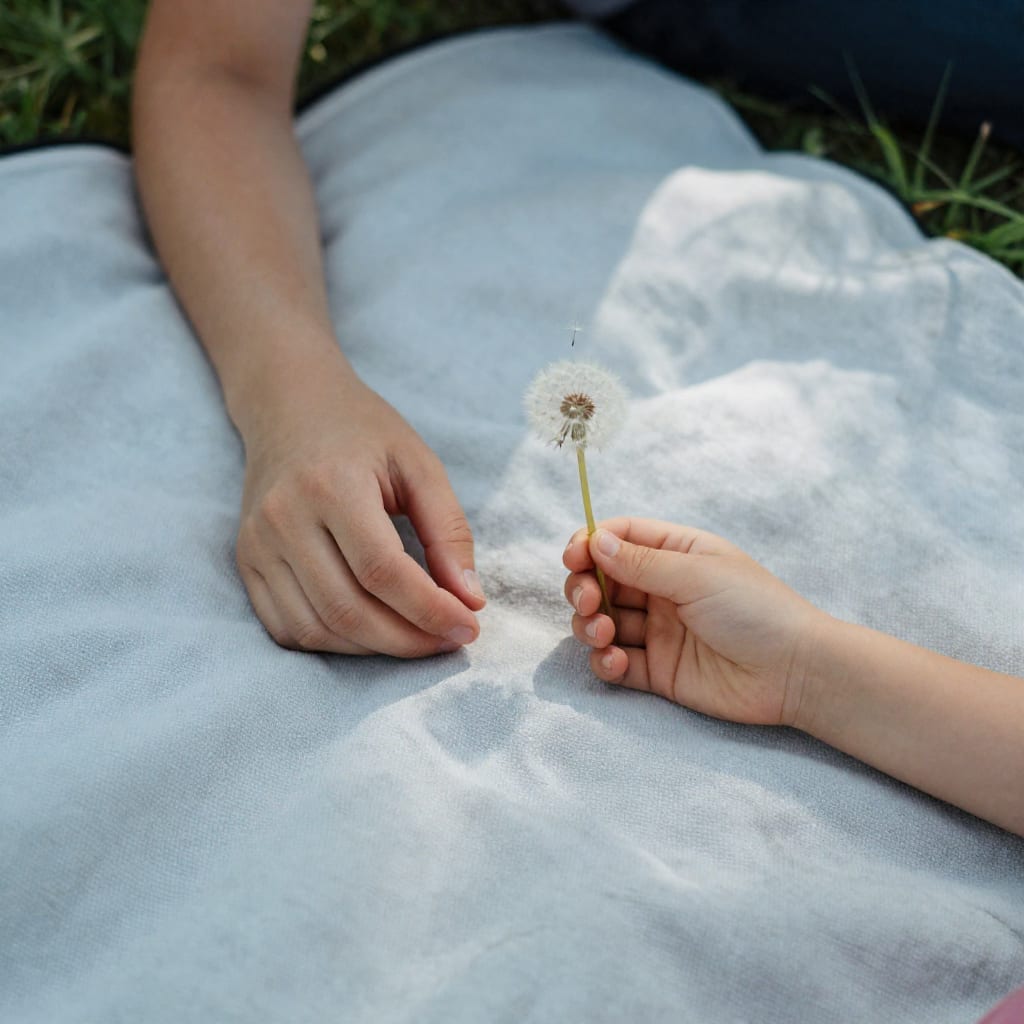
We keep a small patch of lawn in our backyard deliberately unstructured. No swing set, no sandbox, no chalk station. Just grass and a few sticks. The first time I announced "We're having do-nothing time for 20 minutes," my 7-year-old looked at me like I'd suggested we eat cardboard. He wandered in circles, complained of boredom, and then discovered an ant colony that kept him occupied for the full 20 minutes. Now, do-nothing time is a weekend ritual, and it's the one practice that has most radically shifted our family's nervous system baseline.
Unstructured downtime is not laziness. It's a form of sensory and cognitive rest that the brain requires for integration and creativity. The problem is that many parents—myself included, for years—feel compelled to curate every moment with enrichment or entertainment. We schedule playdates, enroll in classes, rotate educational toys, and then wonder why our kids can't entertain themselves for five minutes. When parents model doing nothing—lying on a blanket looking at clouds, staring out a window, sitting on a porch step without a device—they give children permission to exist without producing. This is a self-care habit that runs counter to productivity culture, and that's exactly why it's so potent.
Start small: ten minutes on a weekend morning. Announce it casually ("We're all going to just hang out and do whatever quiet thing comes to mind"). No screens, no structured activity. You might read, doodle, stretch, or simply close your eyes. When a child protests boredom, resist the urge to solve it. Boredom is the gateway to self-directed play and internal resourcefulness. Over time, these pauses accumulate into a family culture that values being over doing—and that's a gift most of us didn't receive growing up.
Habit #4: Talking Out Loud About Your Own Feelings
I used to think that protecting my kids from my negative emotions was an act of love. If I was anxious about a work deadline, I'd put on a cheerful mask. If I was sad after a hard conversation, I'd excuse myself to the bathroom. But kids are emotional barometers; they sense the shift and, without a narrative, they often assume they caused it. When I started narrating my feelings at a level they could understand, the whole household dynamic changed. "I'm feeling a little worried about something at work, and it's making my stomach tight. It has nothing to do with you, and it will pass"—that sentence, delivered calmly, is a self-care habit and a masterclass in emotional intelligence all at once.
This practice requires discernment. The goal isn't to unload adult-sized problems onto children or make them responsible for our well-being. It's to demonstrate that feelings are mentionable and manageable, as Fred Rogers famously put it. Keep it brief, name the physical sensation (tight chest, hot face, shaky hands), and include a simple coping statement ("so I'm going to take some slow breaths while I make tea"). The child learns three things: emotions have bodily signals, they can be named without shame, and they can be soothed with small actions. Over months of this, my son started saying things like "My brain feels buzzy" before a meltdown, which gave us a precious window for intervention that didn't exist before.
Habit #5: Taking Care of Your Body Without Shame or Guilt
I spent years exercising in secret—waking at 5 a.m. so no one would see me, or waiting until the kids were in bed. I told myself I was being efficient, but the truth was more uncomfortable: I didn't want them to see me struggle, sweat, or look ungraceful. And I certainly didn't want to model anything that might be interpreted as vanity or self-absorption. When I finally started doing yoga in the living room while they played nearby, something unexpected happened. My daughter rolled out a towel next to me and started mimicking the poses, giggling. She wasn't judging my form; she was joining in.
How we talk about our bodies in front of our children lays down neural pathways for their own self-concept. If they hear us criticize our appearance, apologize for eating, or treat exercise as punishment, they absorb those associations. The self-care habit here is movement, nourishment, and rest without negative commentary. Say "I'm going for a walk because it helps my body feel strong and my mind feel calm," not "I need to burn off that cake." Eat a cookie in front of them and enjoy it without a disclaimer. Rest when you're tired and say so plainly. This is body-positive parenting in its most practical form—not slogans, but daily modeling that the body is worthy of care, exactly as it is.
One nuance worth naming: this is hard. Most of us carry decades of internalized body shame. You don't have to be perfect; you just have to catch the harmful comments before they land and offer a repair. I've said "Ugh, I feel so gross today" and then, seeing my daughter's face, added "Actually, I'm just tired and my body is doing its best. I'm going to put on something comfortable." The repair is part of the modeling.
Habit #6: Asking for Help (and Letting Kids See It)
I hit a wall last winter when a stomach bug tore through the house and I was the last one standing. My instinct was to power through, but I was shaky and depleted. Instead, I sat on the kitchen floor and said to my partner, in front of the kids, "I'm not okay right now. I need you to take over for an hour so I can lie down." My 8-year-old looked startled—she'd never seen me admit I couldn't handle everything. Later, she asked why I'd done that. I said, "Because everyone needs help sometimes, and pretending we don't just makes things worse."
Asking for help is a self-care habit that directly counters the myth of the self-sufficient, unflappable parent. When children witness a parent reaching out—to a partner, a friend, a neighbor, a therapist—they learn that interdependence is not failure. They learn that vulnerability is a form of strength and that relationships are built on reciprocal support. This is especially critical for boys, who often receive cultural messaging that needing help is unmanly. A father saying "I'm feeling really sad today and I'm going to call Uncle Mike to talk about it" is a radical act of modeling that can shape a child's emotional landscape for life.
Start with small, observable asks: "Can you help me carry these bags? My arms are tired," or "I'm going to ask Grandma to come over so I can take a nap because I'm running on empty." The ask doesn't need to be dramatic. What matters is that it's public and unapologetic. Over time, kids learn to voice their own needs earlier and with less shame. My son, who used to dissolve into tears when he couldn't zip his jacket, now says "I need a hand with this"—and that direct request, I'm convinced, grew out of watching us do the same.
Habit #7: Ending the Day with a Gratitude Pause
Bedtime in our house used to be a sprint: teeth, pajamas, books, lights out, collapse. Then we added a 90-second gratitude pause, and it became the connective tissue of the day. We lie in the dark, each name one thing we're grateful for and one thing that was hard. The "hard thing" part is crucial—it keeps the practice from becoming toxic positivity and gives space for whatever is still unresolved. My 4-year-old often says she's grateful for her stuffed bunny and that the hard thing was "when you said no to candy." Fair enough.
This habit works as self-care for parents because it forces a cognitive pivot away from the day's failures and toward what actually held. For kids, it builds the neural circuitry of noticing the good—a skill strongly correlated with resilience and long-term well-being. A 2022 meta-analysis in Psychological Bulletin found that regular gratitude practices may reduce stress and improve relationship satisfaction in family units, with the strongest effects when the practice was shared and verbally expressed rather than kept private (Wood et al., 2022). The mechanism is simple: attention follows intention, and what we rehearse grows.
Keep it brief and never force it. If a child doesn't want to share, that's fine—you model by sharing your own. "I'm grateful for the ten minutes we spent outside today, and the hard thing was feeling rushed this morning." Over weeks, the habit becomes a small anchor of connection, and children often begin initiating it on their own. It's a self-care habit that costs nothing, takes under two minutes, and doubles as a profound parenting practice.
Frequently Asked Questions
What if I don't have time for self-care as a parent?
Focus on micro-habits that take under five minutes—like the reset ritual or a gratitude pause—rather than large blocks of time. Consistency over duration is what matters most for both your well-being and the modeling effect on your children.
How do I explain self-care to a young child without sounding selfish?
Use simple, concrete language that connects your care to your capacity to be present. For example: "Mommy needs a quiet minute so I can be a happy mommy." This frames self-care as a way to refill your tank so you can give from a fuller place.
Can modeling self-care really change my child's behavior?
Yes, though not overnight. Children learn emotional regulation and coping strategies primarily by observing the adults they're attached to. Consistent modeling over weeks and months can lead to spontaneous imitation and, eventually, internalized habits—but the timeline varies widely by child and age.
What if my partner doesn't support self-care habits?
Start with one small habit you can do entirely on your own, like a five-minute reset or a gratitude pause at bedtime. Once the benefits become visible—less reactivity, more patience—it's often easier to invite a partner in. You can also frame it as something you're doing for the family, not just for yourself.
How long until kids start copying these habits?
It varies widely. Some children imitate within days; most take weeks or months of consistent exposure. The key is repetition without pressure. A child who sees you pause and breathe dozens of times is far more likely to try it themselves than one who receives a single lecture.
Small Shifts, Big Ripples
None of these habits require a personality transplant or a perfectly regulated nervous system. They work because they're small enough to do badly and still benefit from. The reset you fumble through while still annoyed, the "no" you say with a shaky voice, the gratitude you mumble half-heartedly—they all still land. Kids don't need flawless models; they need honest ones. And the surprising, counter-intuitive truth I've learned is this: the self-care that most transforms a family isn't the kind you hide away to "recharge." It's the kind you let them see, messy and imperfect, right in the middle of the beautiful, exhausting circus of daily life.